
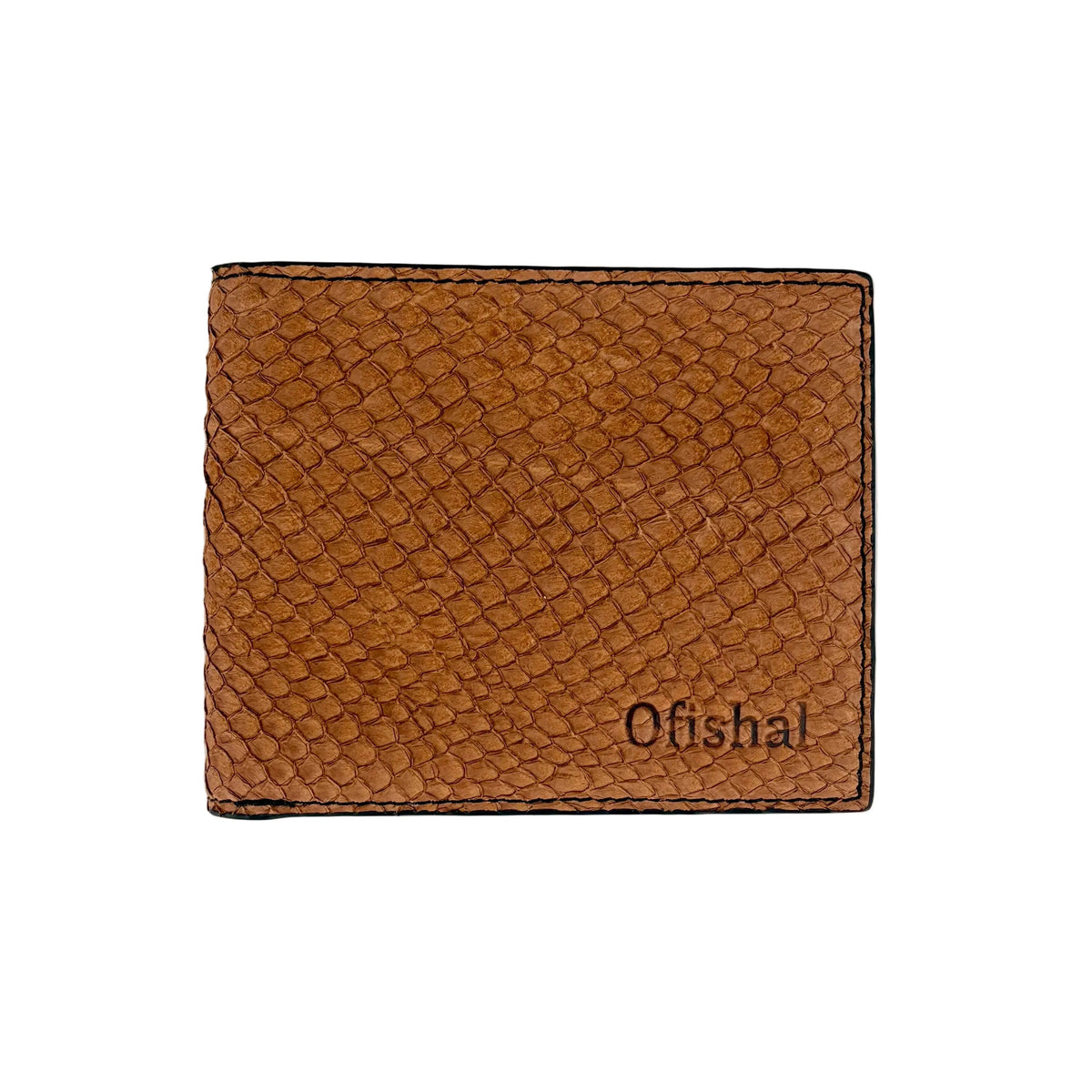
Salmon skin doesn't start out looking anything like the leather in your wallet. Getting there takes several careful stages — here's what actually happens.
1. Collection
Skins are collected as a byproduct of salmon already being processed for food. Nothing is caught or farmed specifically for leather — it's material that would otherwise be discarded, as we cover in our piece on the circular economy of the ocean.
2. Cleaning and descaling
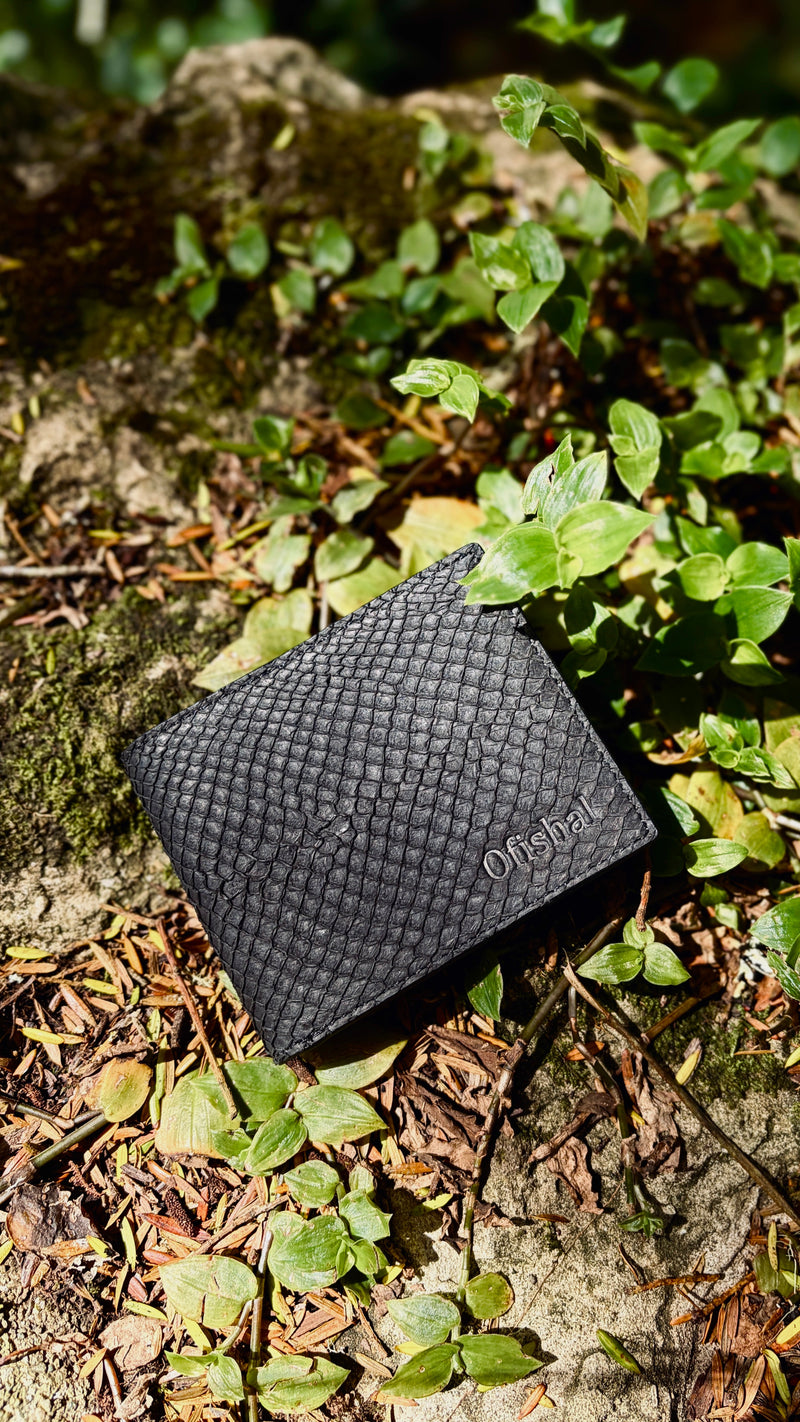
Skins are cleaned of any remaining flesh and residue. Unlike popular belief, the scale pattern isn't removed — it's preserved, because that natural texture is what gives every piece its one-of-a-kind look.
3. Tanning
The skins go through a tanning process that stabilises the collagen fibres, the same basic chemistry used on cowhide, just applied to a much thinner, cross-hatched material. This is also the stage responsible for removing any fishy odour entirely.
4. Dyeing and finishing
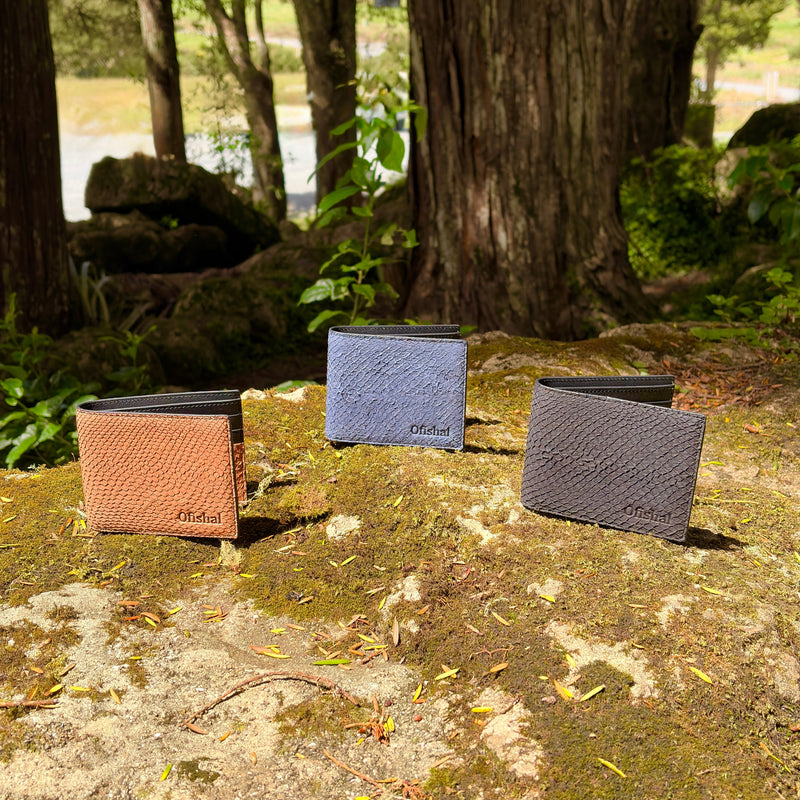
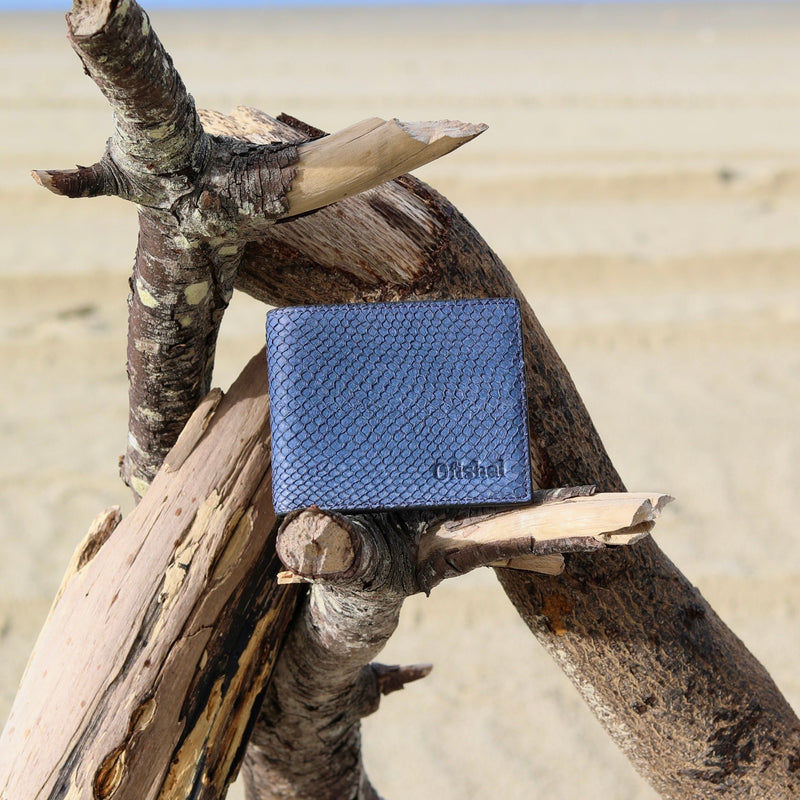
Once tanned, the leather is dyed to colour (our wallets come in Jet Black, Ocean Blue, and Matai Brown) and finished to bring out the natural scale pattern rather than hide it.
5. Cutting and stitching
Finally, the tanned leather is cut and hand-assembled into the finished product — reinforced stitching, card pockets, and the half-fish logo included.
Want to see the finished result? Browse the Fish Leather Bifold Wallet, or read more about what makes fish leather different from cowhide.