
"Exotic leather" covers a lot of ground — and not all of it belongs in your pocket. If you're researching alternatives to cowhide, you've probably come across salmon, stingray, and eel leather all claiming to be the sustainable, durable option. Here's how they actually stack up.
Salmon leather
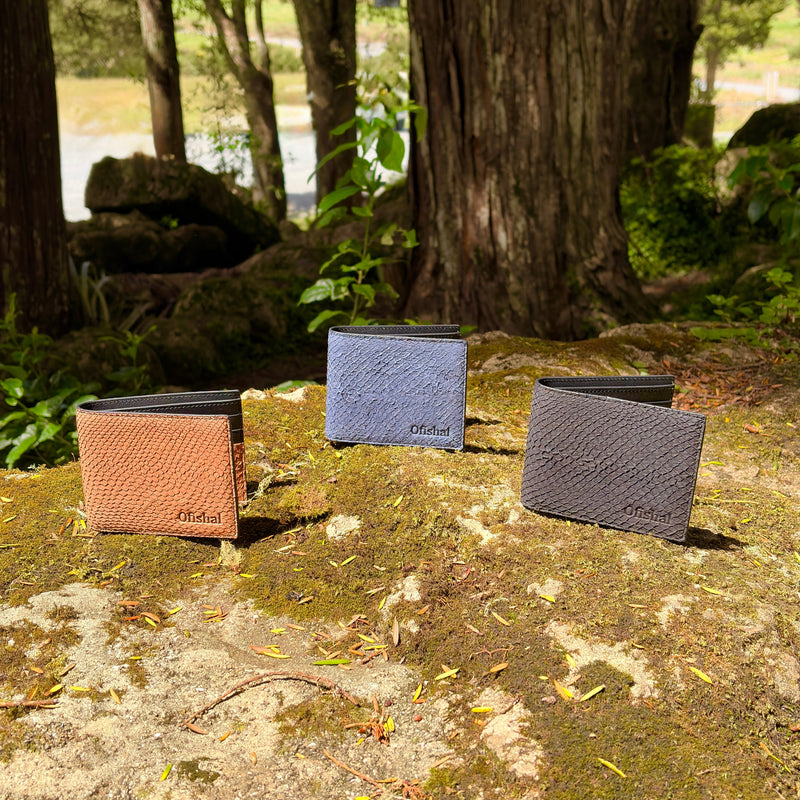
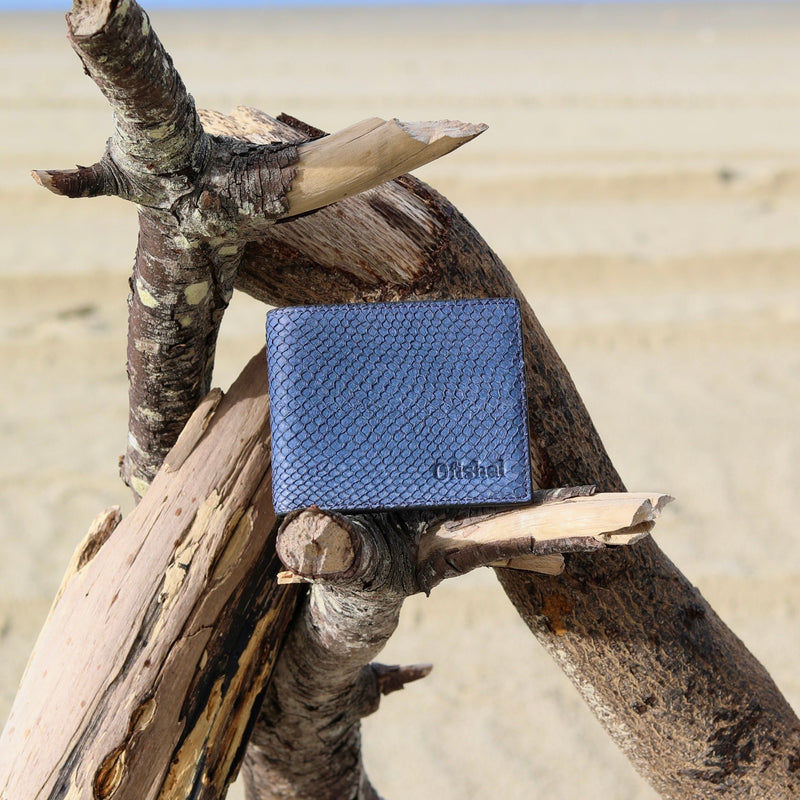
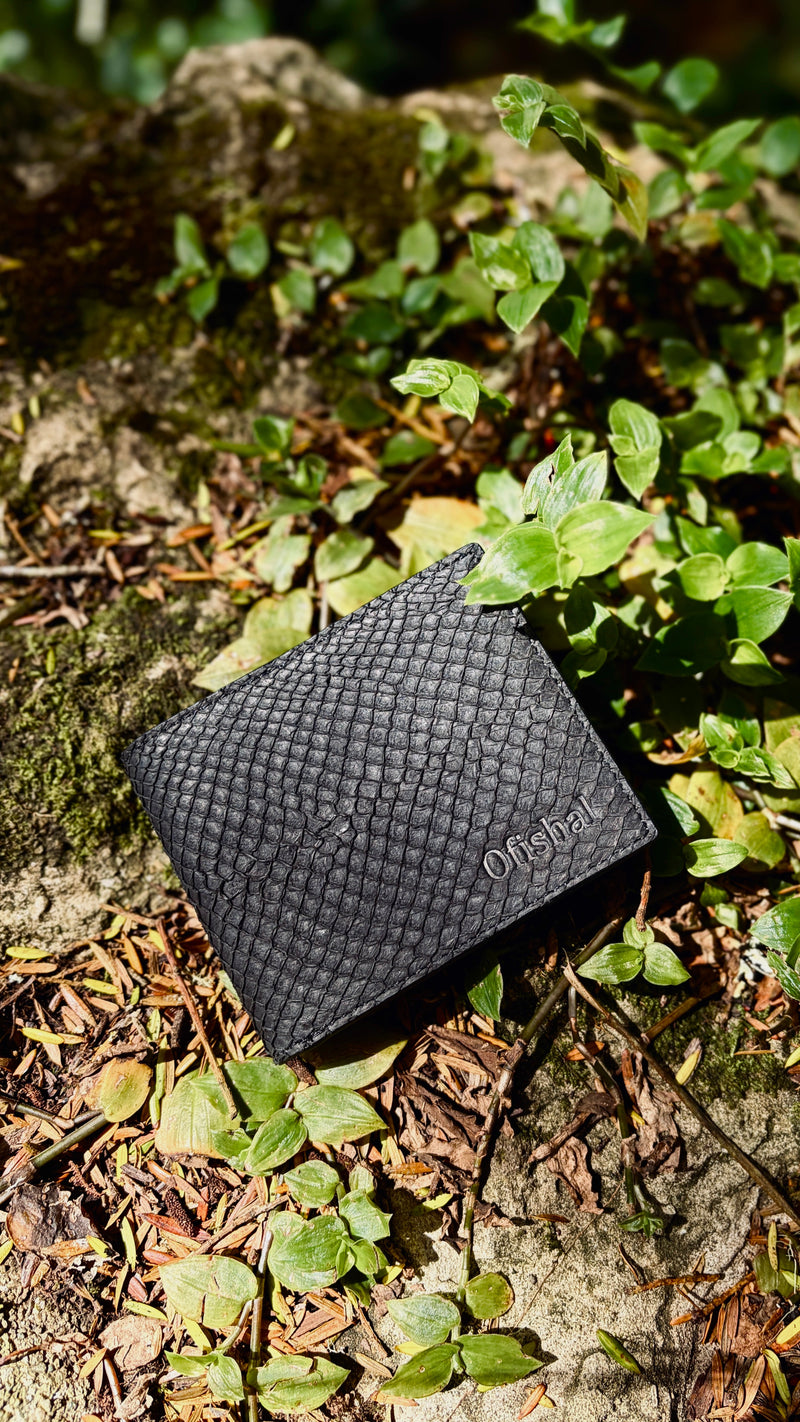
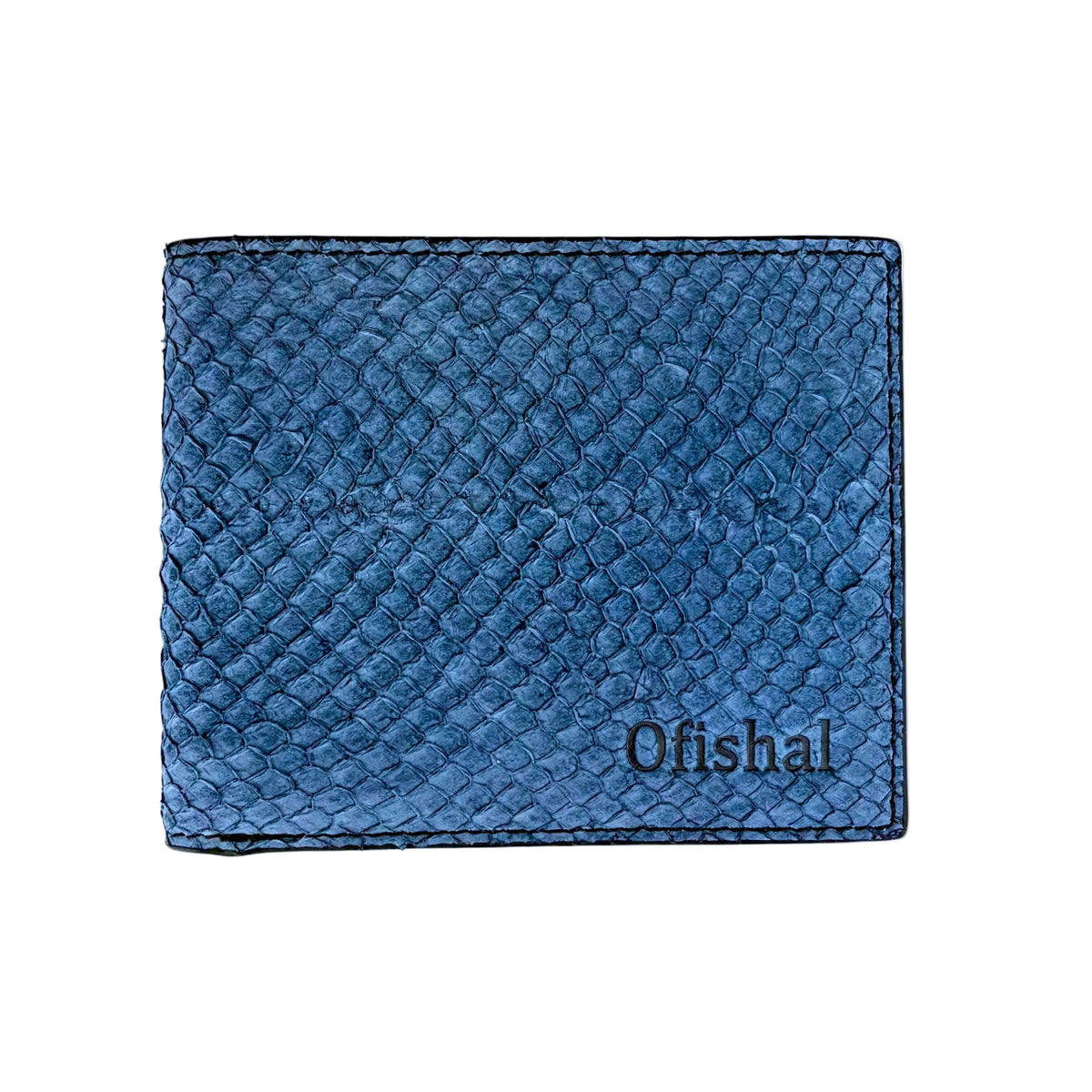
Salmon leather is a byproduct of the food industry — the skin is a waste stream from fish already being processed for consumption. It's naturally strong thanks to a crosshatched fibre structure (more on that in our full durability breakdown), water-resistant, and every skin has a unique scale pattern, so no two wallets look the same.
Stingray leather
Stingray is prized for its hard, pebbled texture and is often used in high-end accessories. It's extremely durable, but it's usually harvested specifically for leather rather than as a byproduct, and the tanning process is more resource-intensive.
Eel leather
Eel "leather" is actually made from strips of skin stitched together in a patchwork pattern, since individual eel skins are too small to use whole. It has a distinctive look but is generally less durable than salmon or stingray for daily carry items like wallets.
Why we chose salmon
For a wallet that gets opened dozens of times a day, we wanted something byproduct-based (so it's not creating new demand on fish stocks), genuinely strong, and large enough to work with in a single piece rather than a patchwork. That's why every Fish Leather Bifold Wallet is cut from real salmon skin sourced from the fishing industry, not farmed specifically for leather.
Curious where our leather actually comes from? Read about the story behind Ofishal.