
"Vegan" and "sustainable" get used interchangeably when it comes to leather alternatives, but they're not the same thing. Here's a closer look at how fish leather and typical vegan leather actually compare.
What most vegan leather is made from
Most vegan leather on the market today is a plastic — polyurethane (PU) or PVC, often referred to as "pleather." Some newer materials use plant bases like cactus, apple, or mushroom fibre, but the majority of affordable vegan leather is still petroleum-derived.
The sustainability problem with plastic leather
PU and PVC leathers are made from fossil fuels, don't biodegrade, and shed microplastics as they wear. They also tend to crack and peel within a couple of years — meaning more of them end up in landfill, more often.
Where fish leather is different
Fish leather is a genuine byproduct — skin from fish already being processed for food, which would otherwise be discarded. As covered in our piece on turning fish waste into fashion, it's not creating new demand on any animal population, it's using material that already exists.
Durability changes the equation too
A material's environmental footprint isn't just about what it's made from — it's about how long it lasts. A wallet that needs replacing every year has a bigger footprint than one that lasts a decade, regardless of material. We go deeper on this in why fish leather outperforms cow leather for durability.
The honest answer
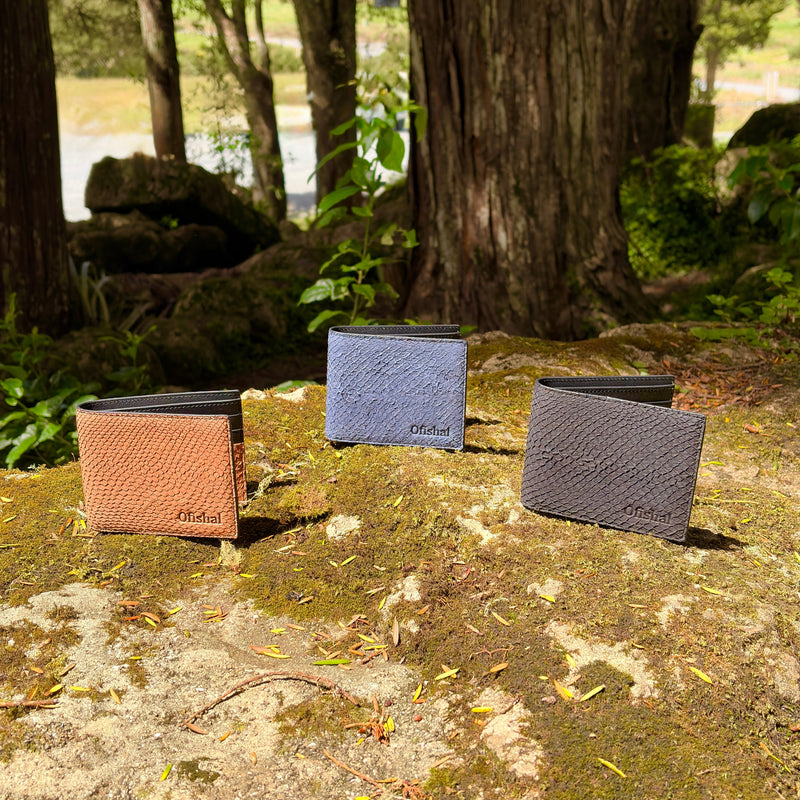
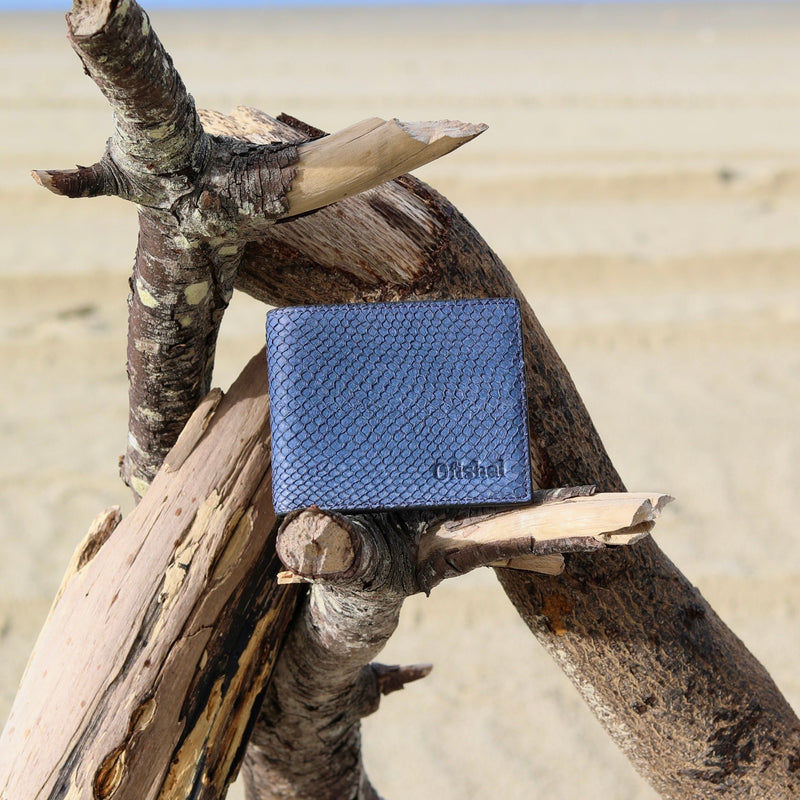
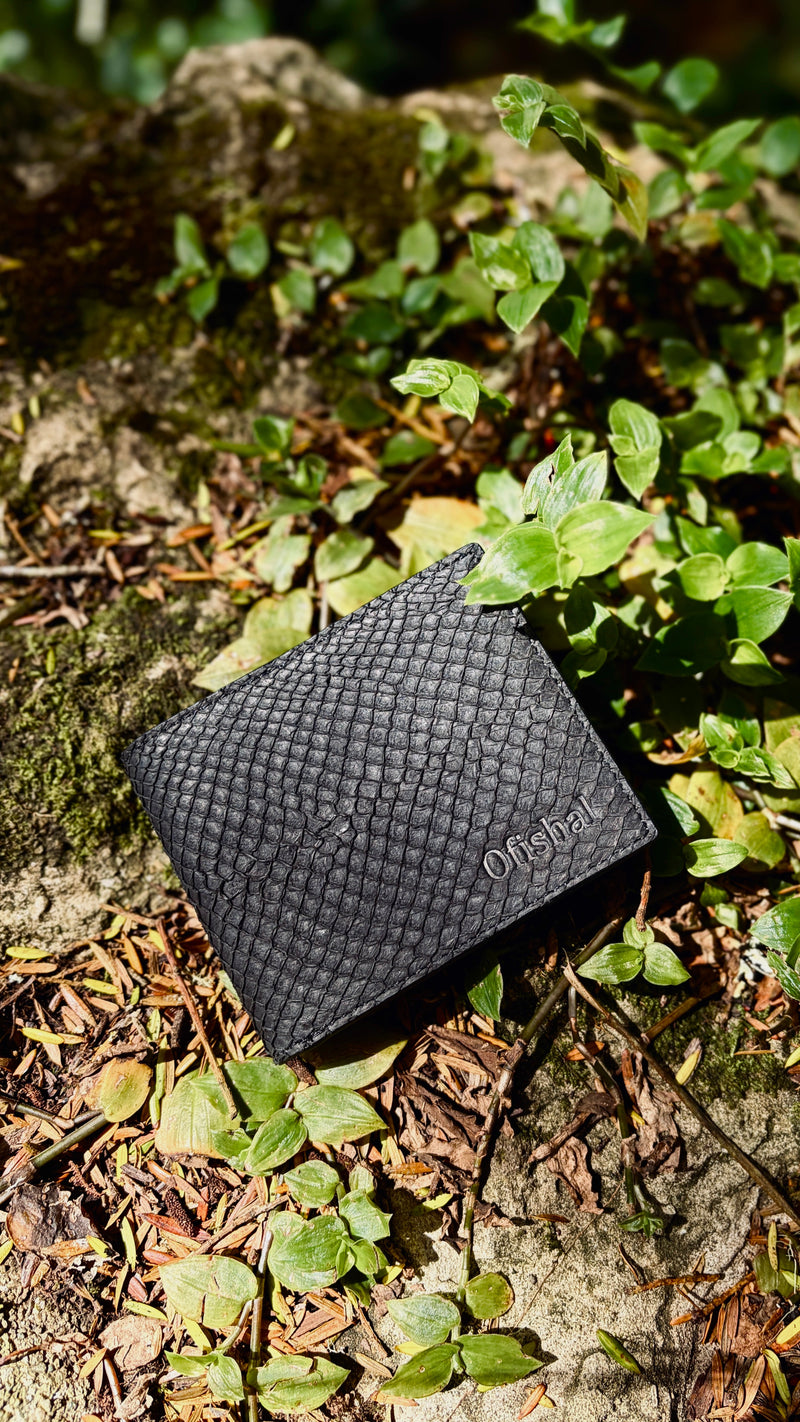
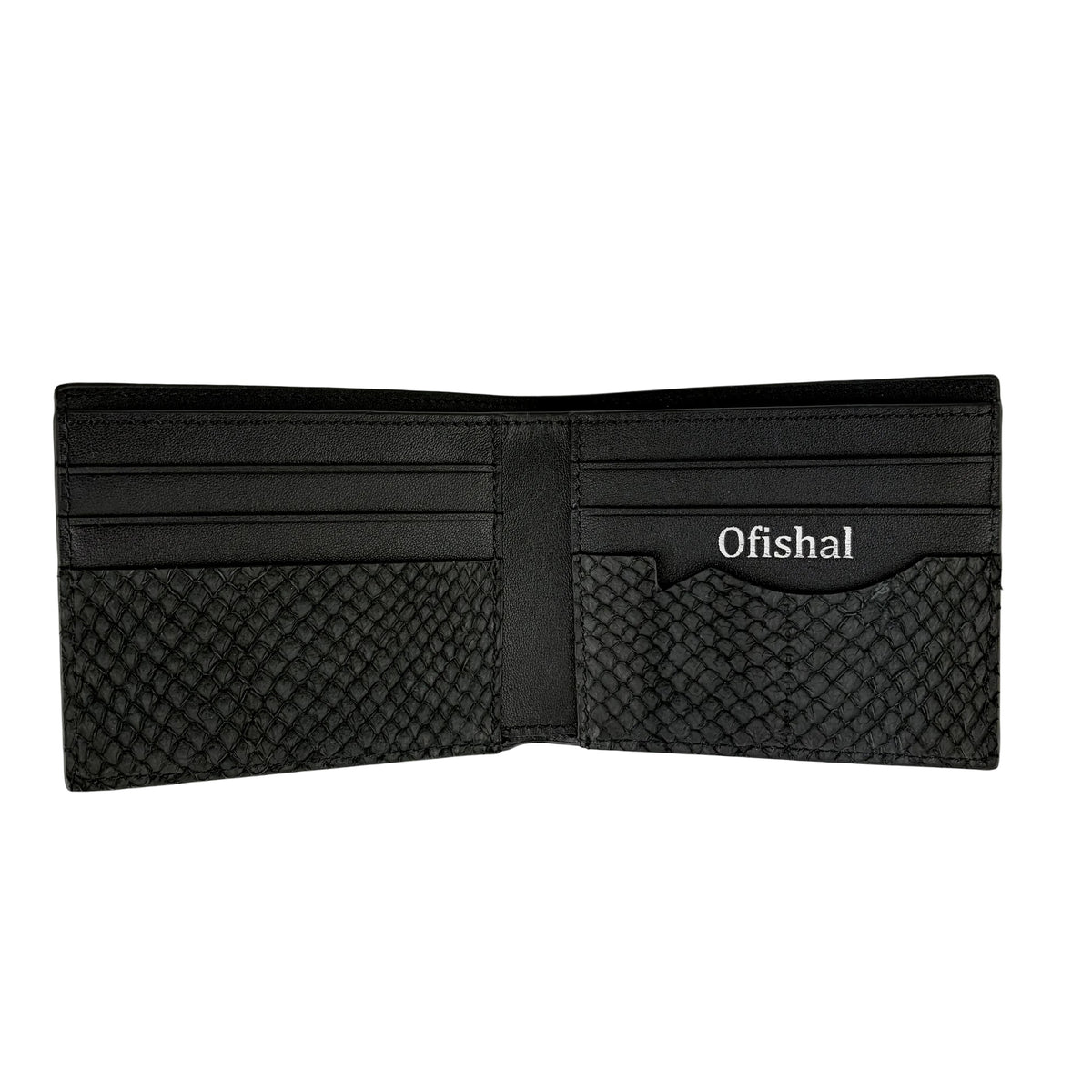
Neither material is perfect, but byproduct-based fish leather avoids both the animal-welfare concerns of cowhide and the plastic problem of most vegan leather. If that trade-off matters to you, it's worth a look at the Fish Leather Bifold Wallet.